

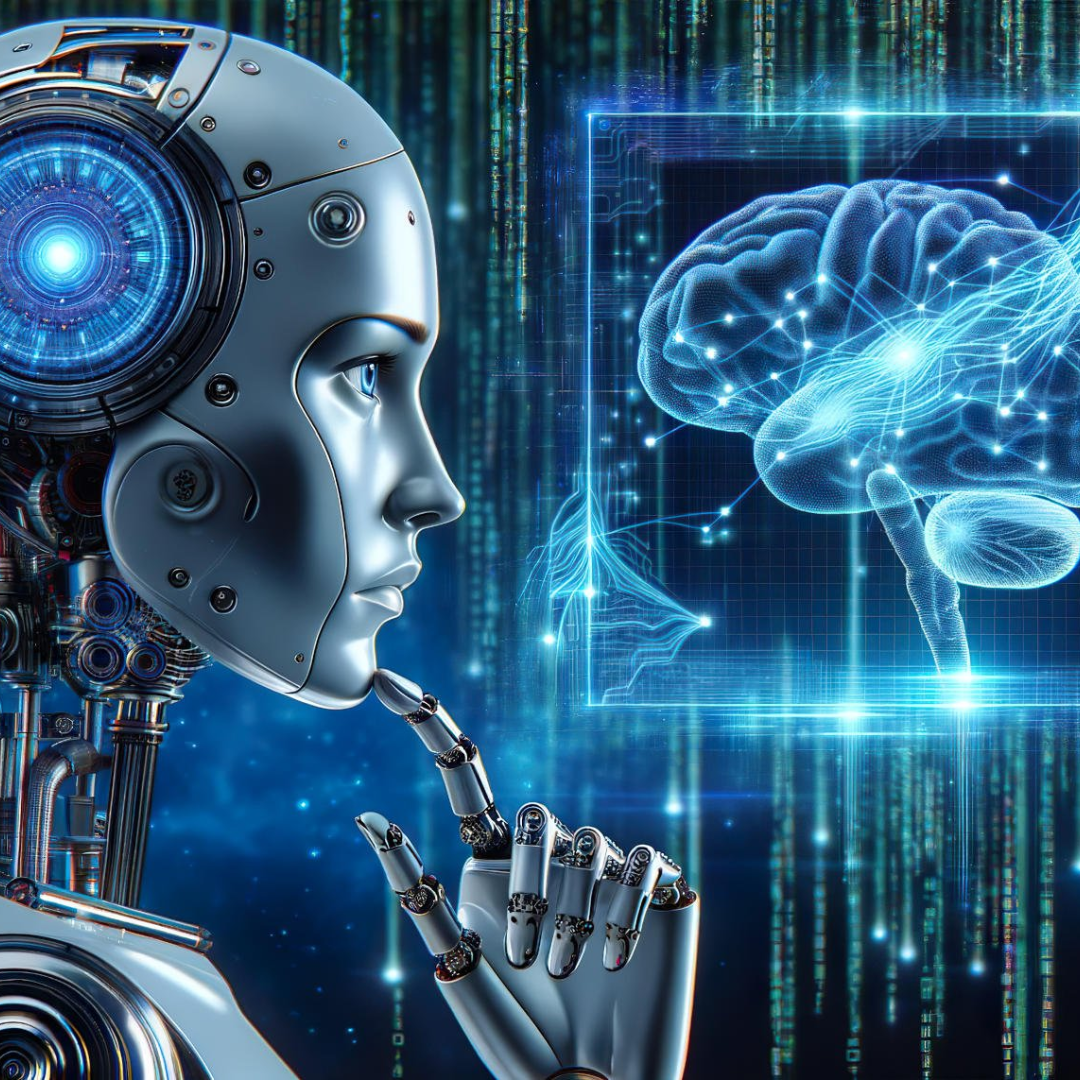
Artificial Intelligence (AI) has moved beyond buzzwords. What was once a futuristic promise is now the foundation of innovation across every major industry — healthcare, finance, manufacturing, retail, entertainment, and governance. In 2025, AI isn’t a supporting tool anymore; it’s the central engine driving transformation, efficiency, and creativity.
But the AI ecosystem evolves fast. Breakthroughs that seemed years away are now mainstream — multimodal models understanding text, image, and voice together; AI agents autonomously managing workflows; quantum-powered AI enhancing computation. To stay ahead, professionals, businesses, and technologists must understand where AI is heading next.
Here’s a detailed look at the top Artificial Intelligence trends defining 2025, and how they’re reshaping industries, economies, and even our daily lives.
1. Generative AI Goes Multimodal
Generative AI no longer just writes text — it listens, sees, speaks, and acts. The next generation of AI systems, like GPT-5-class models, Gemini, and Claude-style architectures, are multimodal by design, meaning they understand and generate across multiple forms of media simultaneously.
Why It Matters
- Unified Intelligence: Instead of separate systems for voice, vision, and text, multimodal AI merges perception with reasoning. You can upload a spreadsheet, ask a question verbally, and get a visual chart as a response.
- Creative Industries Transformed: From movie storyboarding to product design, AI can now generate cohesive multimedia campaigns in seconds.
- Accessibility Breakthroughs: Vision-impaired users can describe photos; non-native speakers can converse through instant real-time translation.
Industries Impacted
Education, marketing, digital art, journalism, and customer service — anywhere human expression needs visual and verbal understanding together.
2. AI Agents and Autonomous Workflows
2025 marks the rise of autonomous AI agents — digital co-workers capable of managing complex, multi-step tasks with minimal human input. Unlike traditional bots that follow rules, these agents reason, plan, and adapt.
How They Work
AI agents integrate large language models with task memory and real-time APIs. They can browse data, schedule tasks, send emails, analyze results, and improve their performance autonomously.
Why It Matters
- Operational Efficiency: Companies are automating entire departments — scheduling, reporting, lead generation — through AI-driven workflows.
- Round-the-Clock Productivity: Agents never tire, ensuring constant monitoring and execution.
- Knowledge Retention: Agents maintain context over weeks or months, effectively becoming digital employees.
By late 2025, most enterprise platforms — from CRM to ERP — will have native “AI coworker” features built in.
3. AI-Powered Personalization Reaches Hyper-Scale
Personalization has evolved from recommendation algorithms to predictive intent modeling. In 2025, AI systems not only suggest content or products — they anticipate user needs before they’re even expressed.
Applications
- E-Commerce: Dynamic websites now change layouts and promotions in real time based on shopper emotion and micro-behaviors.
- Healthcare: Treatment plans and wellness advice adjust automatically based on patient biometrics.
- Media: Streaming platforms curate scenes, pacing, or soundtrack versions to match mood profiles.
AI in 2025 understands contextual nuance — location, time, emotional tone, and behavioral history — creating true hyper-personalization.
4. Explainable and Responsible AI Takes Center Stage
With AI systems embedded in sensitive domains like healthcare and finance, explainability and ethics are non-negotiable. Governments worldwide have tightened AI governance policies under frameworks like the EU AI Act and India’s Digital Ethics Charter.
Key Developments
- Explainable AI (XAI): Models must justify decisions in human terms — why a loan was denied or a diagnosis made.
- AI Auditing: Independent verification of model bias, accuracy, and data lineage.
- Ethical Design: AI products must demonstrate transparency, inclusivity, and environmental responsibility.
Why It Matters
Responsible AI isn’t just compliance — it’s brand trust. In 2025, companies that can explain AI decisions gain the confidence of users and regulators alike.
5. AI + Cybersecurity = Self-Defending Networks
As cyber threats evolve, traditional defenses fall short. 2025’s cybersecurity paradigm relies on AI-driven self-defense.
What’s New
- Anomaly Detection 2.0: Neural networks now monitor data streams in real time, spotting threats before signatures exist.
- Predictive Security: AI models anticipate vulnerabilities before hackers exploit them.
- Autonomous Patching: Self-healing systems repair compromised components instantly.
Real-World Use
Banks, defense agencies, and telecoms are adopting continuous AI security monitoring to neutralize zero-day attacks within seconds.
In essence, AI has become both sword and shield — creating threats, but also countering them faster than humans ever could.
6. Edge AI Makes Devices Smarter
AI is leaving the cloud. Edge computing — running AI directly on devices — has matured to the point where phones, cars, and sensors process data locally, reducing latency and privacy risks.
Why It’s Transformative
- Speed: Real-time decision-making for autonomous vehicles, drones, and wearables.
- Privacy: Data never leaves the device, addressing compliance concerns.
- Cost Efficiency: Reduced dependency on cloud computation saves bandwidth.
Edge AI is powering everything from predictive maintenance in factories to smart health monitoring on your wrist.
7. Generative Design and Co-Creation Platforms
The creative industries are no longer just “AI-assisted” — they’re AI-collaborative. Designers, architects, and engineers are using generative systems to co-create solutions faster than ever.
Examples
- Architects use AI to propose eco-friendly building layouts optimized for sunlight and airflow.
- Fashion designers co-design outfits with AI mood boards that respond to color and cultural trends.
- Engineers generate multiple prototypes instantly, testing durability through AI simulation.
In 2025, creativity is no longer limited by tools — it’s amplified by intelligent collaboration.
8. The Rise of Synthetic Data
With privacy laws restricting access to real datasets, industries are turning to synthetic data — AI-generated information that mimics real-world patterns without exposing individuals.
Why It’s Crucial
- Fuels Machine Learning: Synthetic data fills gaps where real data is scarce.
- Protects Privacy: Enables AI training without compromising sensitive information.
- Cost-Effective: Creates scalable datasets for testing and simulation.
Healthcare, banking, and autonomous driving are major adopters — synthetic environments allow for faster, safer experimentation.
9. AI in Healthcare – Predictive, Preventive, Personalized
Healthcare in 2025 looks nothing like before. AI isn’t just diagnosing illness — it’s predicting and preventing it.
Major Shifts
- Predictive Diagnostics: AI models detect diseases years before symptoms emerge through genomics and blood biomarkers.
- Drug Discovery: AI reduces research timelines from years to months by simulating molecular interactions.
- Virtual Health Assistants: Personalized AI companions track vitals, nutrition, and therapy adherence.
- Surgical Robotics: Vision-based AI improves precision and recovery times.
By 2025, AI isn’t replacing doctors — it’s making them superhuman.
10. AI-Generated Code and Autonomous Software Development
Software development has entered the age of co-creation. AI can now analyze, debug, and write code in natural language.
Trends to Watch
- Prompt-to-App Systems: Users describe an app verbally, and AI builds prototypes automatically.
- Automated QA Testing: AI simulates user behavior and fixes bugs autonomously.
- Continuous Learning: Developer AIs learn from every project, improving code style and performance.
Companies are shifting focus from “how to code” to “how to instruct.” AI doesn’t eliminate developers — it empowers them to think bigger.
11. AI for Climate and Sustainability
AI has become a silent weapon in fighting climate change. 2025 marks an era of Green AI, using machine learning to track emissions, optimize resources, and build smarter energy systems.
Applications
- Climate Forecasting: Predicts extreme weather with greater precision.
- Energy Optimization: Smart grids adjust distribution in real time.
- Agricultural AI: Uses satellite imaging to guide irrigation and crop cycles.
- Carbon Accounting: AI systems monitor supply chain emissions for sustainability reporting.
Technology alone can’t save the planet — but with AI, every watt counts.
12. AI Regulation and Global Governance
AI’s power has forced governments to act. In 2025, we’re witnessing the first global frameworks defining accountability, transparency, and risk classification.
Developments
- The AI Act (Europe): Categorizes AI by risk level, from minimal to unacceptable.
- U.S. AI Bill of Rights: Enshrines data privacy, fairness, and accountability.
- Asia’s AI Consortium: Collaborative data-sharing and ethics across APAC economies.
Impact
Regulation is now a competitive advantage. Businesses that design AI with compliance in mind are more likely to win long-term trust and market share.
13. Quantum AI – The Next Frontier
Quantum computing is no longer hypothetical — and its fusion with AI marks one of 2025’s most exciting breakthroughs.
What It Means
Quantum processors can analyze massive datasets simultaneously, exponentially speeding up AI training and optimization. Problems in cryptography, logistics, and materials science that once took weeks now resolve in hours.
Why It Matters
- Faster Learning: Quantum algorithms enable ultra-efficient model training.
- Unbreakable Security: Quantum encryption reshapes data protection.
- Scientific Discovery: From new drug molecules to clean energy materials.
Quantum AI won’t replace classical models overnight, but it’s the dawn of the next computational era.
14. Human-AI Collaboration Becomes Seamless
In 2025, humans and machines don’t compete — they collaborate. The new generation of Human-in-the-Loop (HITL) systems blends AI efficiency with human creativity and judgment.
Examples
- AI drafts content; humans refine emotion.
- AI predicts trends; humans interpret meaning.
- AI manages workflow; humans direct ethics and purpose.
This partnership ensures that AI augmentation remains humane, ethical, and aligned with cultural nuance. It’s not about automation anymore — it’s amplification.
15. Emotionally Intelligent AI
Beyond logic and data, AI is learning empathy. Emotion recognition technology now interprets tone, expression, and physiological signals, allowing systems to respond with emotional context.
Where It’s Used
- Customer Service: AI agents detect frustration and switch tone instantly.
- Education: Adaptive tutors gauge student engagement and adjust teaching style.
- Healthcare: AI monitors patient mood and recommends therapy adjustments.
Emotionally intelligent AI humanizes automation — making it not just smart, but sensitive.
16. AI-Generated Music, Film, and Storytelling
Entertainment is transforming faster than any other field. AI can now compose music, generate scripts, and even animate characters autonomously.
Trends Emerging in 2025
- Film studios use AI to pre-visualize entire scenes before shooting.
- Game studios generate NPC dialogues and world lore in real time.
- Musicians collaborate with AI producers to experiment with infinite genres.
AI creativity doesn’t replace art — it expands what art can be.
17. AI and Education – Personalized Learning at Scale
In classrooms and online platforms alike, AI-powered learning systems are becoming universal tutors. They track comprehension patterns and personalize lessons for each student.
How It’s Changing Learning
- Adaptive quizzes adjust in difficulty automatically.
- Virtual mentors provide 24/7 assistance.
- Language models help students write, code, and debate intelligently.
In 2025, education is no longer one-size-fits-all — it’s custom-crafted for every learner.
18. AI in Finance and Economics
AI is now the invisible CFO of many organizations. In 2025, it manages portfolios, forecasts economies, and predicts global trends with unprecedented accuracy.
Applications
- Algorithmic Trading: Predictive models identify patterns invisible to human analysts.
- Fraud Detection: Real-time behavioral AI spots anomalies instantly.
- Credit Scoring: AI evaluates holistic profiles, not just numbers.
Finance has become data-driven to the core — and AI sits firmly at the center.
19. The Democratization of AI Tools
AI used to belong to labs and corporations. In 2025, it belongs to everyone. Platforms offer no-code or low-code interfaces where anyone can build chatbots, analyze data, or automate tasks.
Examples
- Small businesses creating AI ads without developers.
- Students building chat assistants in minutes.
- NGOs analyzing social trends through free AI APIs.
The next wave of innovation will come not from tech giants, but from everyday creators empowered by open tools.
20. AI and the Future of Work
AI isn’t taking jobs; it’s changing how we work. 2025’s workplace runs on augmented intelligence — humans define direction, AI executes precision.
Shifts Happening Now
- Job roles evolving from repetition to strategy.
- AI copilots embedded in productivity suites.
- New positions emerging — AI ethicists, prompt engineers, data storytellers.
The workforce of 2025 thrives on synergy — creativity from humans, computation from machines.
Conclusion
The year 2025 stands as a turning point in human–machine collaboration. AI has matured from an experimental curiosity into a dependable co-creator, analyst, and strategist. The trends shaping this era — from multimodal intelligence to ethical governance and quantum acceleration — point toward one unifying truth: AI is no longer futuristic; it’s foundational.
Understanding these trends isn’t optional; it’s essential. Whether you’re an entrepreneur, developer, policymaker, or everyday user, embracing AI’s direction in 2025 means staying relevant in a world where intelligence — human or artificial — defines success.
Disclaimer
This article is fully original and created purely for editorial and informational purposes. No content has been copied or sourced from any external website. All explanations reflect independent analysis of current and emerging AI developments.
